
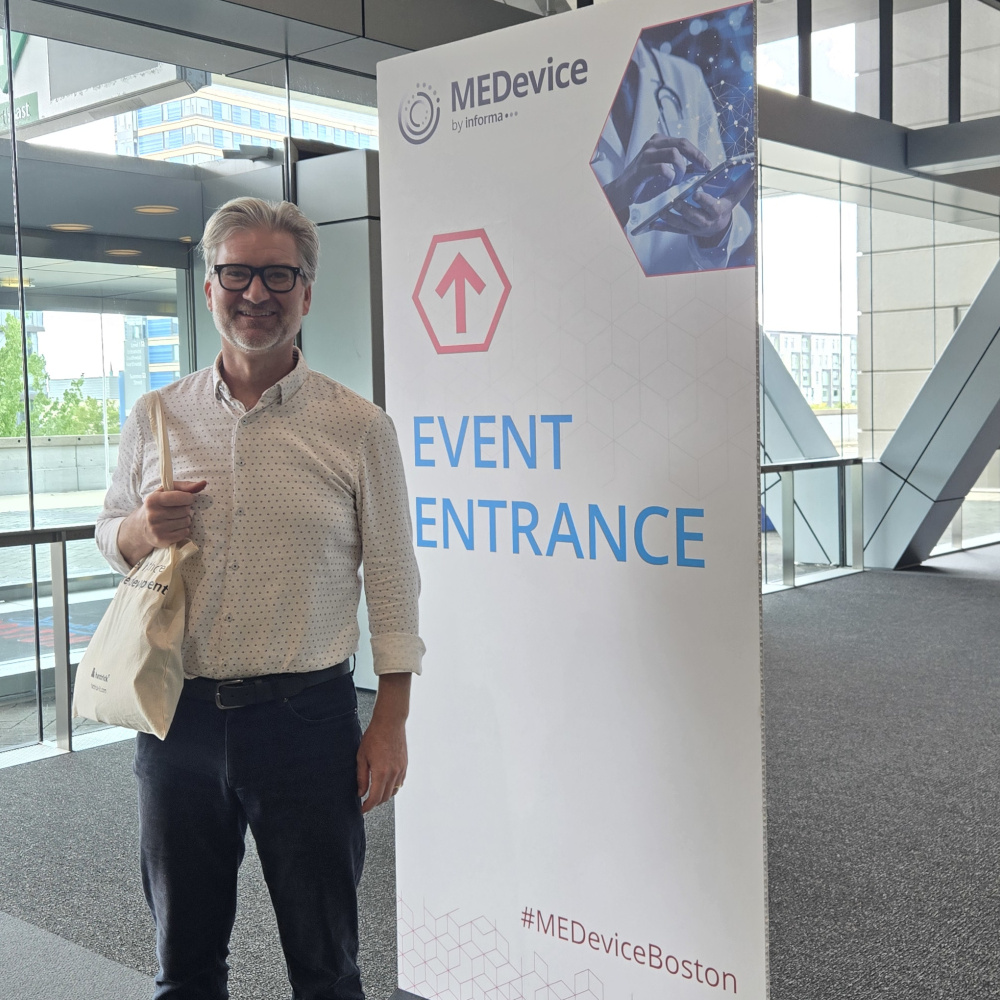
This was my first time at MEDevice; I’ll go back next year. The show filled Hall C of the Menino Convention & Exhibition Center with about 200 exhibitors. Most exhibitors were product development consultants or contract manufacturers. I counted two or three exhibitors promoting the use of AI for maintaining regulatory compliance.
If you have an idea for a medical device you could find all the partners you’d need to bring it to daylight here. Thanks to Hattrick for the tote bag!
Lactoprene(r) HMX
A high-modulus absorbable biomaterial is offered by Poly-Med, Inc. This author believes a root-form dental implant is possible using a bio-absorbable lattice to hold dental stem cells that will regrow the periodontal ligament (PDL). Two different materials may be needed: one for the PDL and one as a temporary implant to be absorbed by the jawbone. Granted, I don’t have all the details ironed out!
Poly-Med can 3D print their Lactoprene(r) HMX material. Blanks for milling might be the best route for individualized or patient-specific parts.
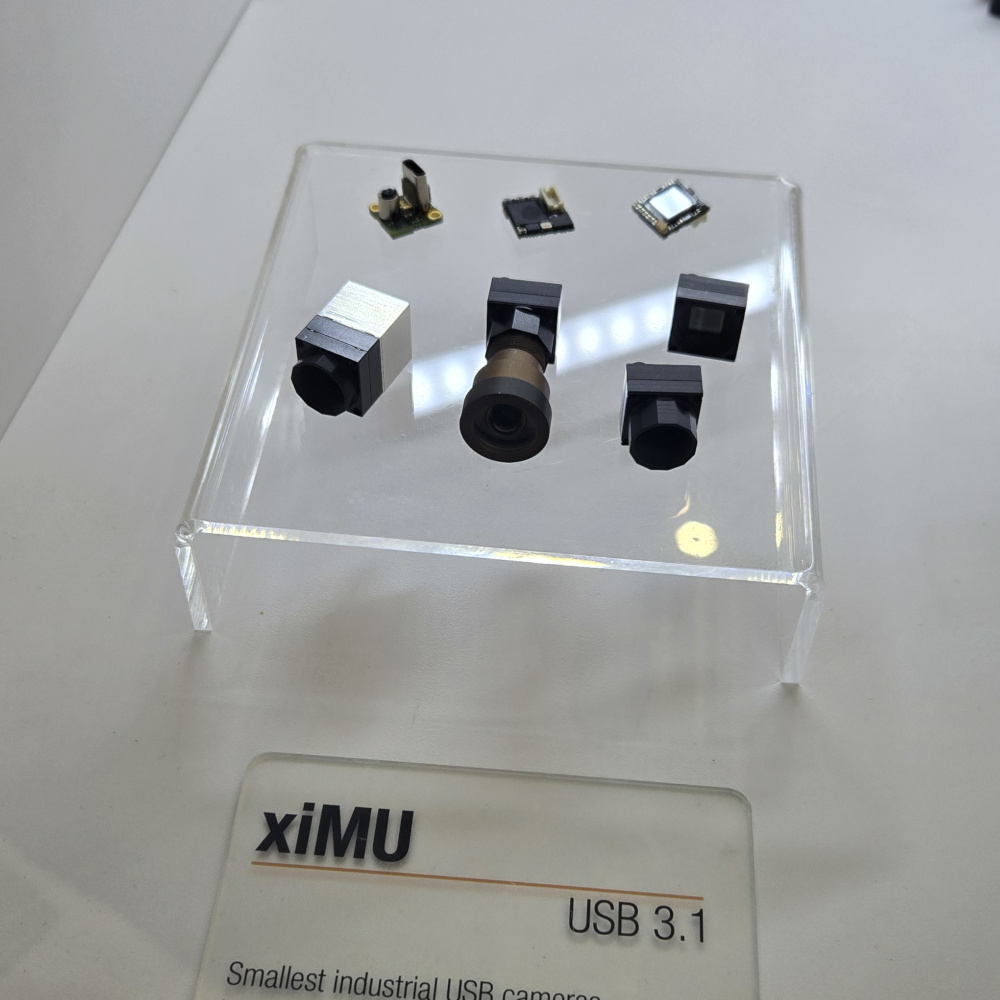
xiMU camera
XIMEA showed their smallest form factor (15 x 15mm) camera. It has a USB3 interface. This off-the-shelf technology is probably not sufficient, but intraoral scanners are too damn big!
Best in Show
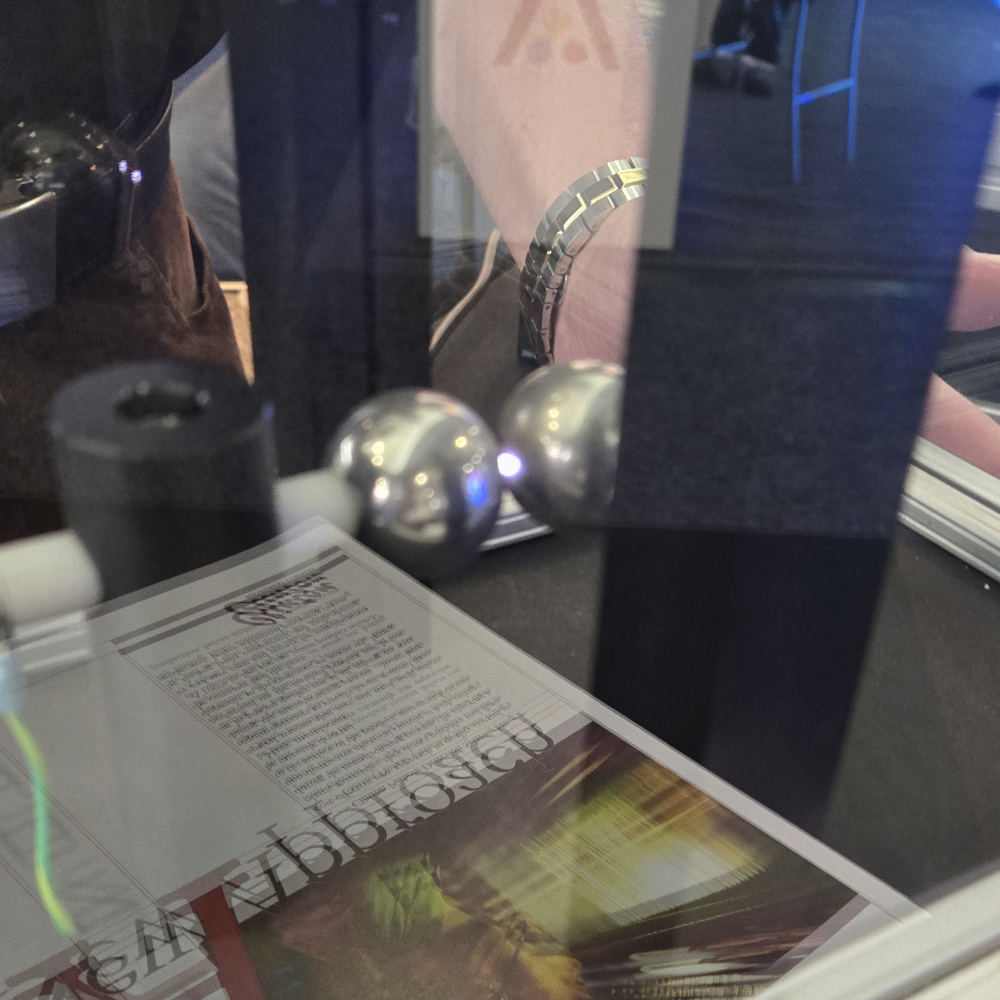
Clinton Instrument showed their pinhole detection equipment, which is basically implemented by passing the part through a Van de Graaff generator. Their table-top demo was wicked awesome.
Did you attend MEDevice Boston 2026? Share your insights in the comments!